Wednesday, September 26, 2012

Rambha, Chilika: Soak in a salty lagoon's lap.


Courtesy : http://www.trekearth.com/

The rain lashed the window pave of the AC compartment as our train was whizzing past inconspicuous stations on the Howrah-Chennai track. We were, actually, heading for a lesser known town south of puri and the gateway to Chilika, Asia’s biggest salt water lagoon on the Bay of Bengal.

Next morning we got down at Balugaon and headed for the OTDC Panthanivas at Rambha. The Panthanivas is a sprawling compound facing the lake with AC cottages, AC and Non AC DB rooms and a conference hall and a beautiful garden. Fish lovers can have a treat here with the variety of both the species and the menu which includes items of prawns, lobsters, crabs and a host of sea fishes.

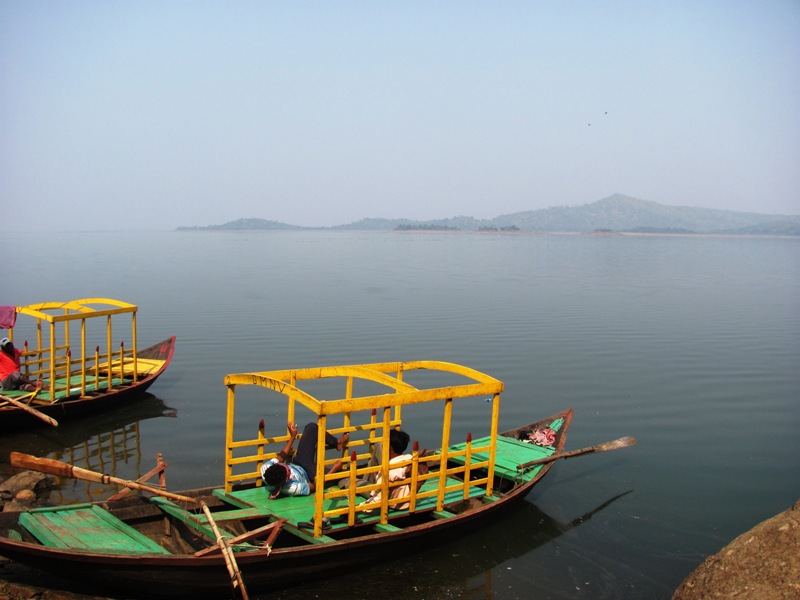
Being clustered in the city our souls long for open space. We wasted no time but headed straight towards the jetty connected by a straight road inside the lake. The jetty is a makeshift fishing harbour from where you can ire a boat to take a short trip. But for sight seeing tours it is advisable to opt for the OTDC packages.

Next day early morning we headed for the Kalijai Island It has the famous Kalijai temple where thousands of devotees throng during Makar Shankranti.. OTDC arranges a boat if there are ten or more heads and they charge a total of three thousand bucks for Kalijai and back which takes six hours. One can see the Bird Island, Nalbana, Breakfast Island, Honeymoon Island, Ghantashila hill island en route. These places are a bird haven where Siberian birds flock in during winter.

But the most attractive part of this tour is a visit to Rishikulya Beach 18 km away, where Olive Ridley turtles visit for nesting and hatching. The turtles come in February for nesting and in April and May for hatching. One will have to get there at midnight to see the nesting when the turtles dig holes using their flippers to lay their eggs and floats back. During harvesting season one has to visit Rishikulya in the early morning during the harvesting season. Due to illegal killing of these turtles in the vicinity, one may come across a few carcasses and have to endure the stench. Its better to have precise knowledge of the timings of the visit of turtles at Rishikulya, as the window is slim, a week at the most.

Sunset at chilika

The evenings are pleasant and one can stroll in the beautiful garden in the premises while see the children play. Its time for a cup of tea with pakodas, or a bottle of beer to chill out.


Amitava Chakrabarty


Navigator: By train to Balugaon and then by Auto or Car to Panthanivas Nearest Airport is Bhubaneswar from where Rambha is roughly 130 Km.

Stay: PANTHANIVAS RAMBHA
Phone: 06810-278346, email: 
otdc@ortel.net 
Bookings at Kolkata : Utkal Bhavan, 55 Lenin Sarani, Calcutta. Phone 22651195/ 22654556 ...

Enhanced by Zemanta

Saturday, September 8, 2012

If Dreams Were True


“Hold fast to dreams,
For if dreams die
Life is a broken-winged bird,
That cannot fly.” 
 
Langston Hughes


Courtesy: Ron Leishman
Yesterday I dreamt a dream. Subconscious, they say, play an important role in its origin. But it was a consciously subconscious dream. I was flipping the web pages to gather information about the city of Melbourne just to try and write something worthwhile to submit an article on Melbourne in IndiBlogger. Soon the information cluttered up my brain and the bawl within gradually subsided when I let myself leave the idea of scribbling a story. Rather, it was easier for me to seek recluse on my sofa for a catnap. It was then when I dreamt the most colourful dream of my life.

A race course- all in black, white or shades of grey. A horse was running. I know him. He was the icon of a country reeling under the Great Depression preceding  World War-II. He is the famous Phar Lap, the champion thoroughbred racehorse. Each of his muscles expanding in exuberance of the race; each turgid veins throbs in victory’s own blood, upon the turf where he is winning one of the 37 races that he has won. The race faded out. I saw him encased in a glass case in the Melbourne Museum, cold, still and breathless. The woody ambiance has its sheen but somewhere spews deep sad sighs- sighs from the lungs fed by the 14 lb heart that is still preserved in Canberra National Museum. His heart stopped on 5th April, 1932 in America, where he ran his last race and was poisoned by a lethal dose of Arsenic. The window of hope was closed suddenly in the island continent thousand miles away.

The green race course suddenly changed into a stadium. I have seen this arena. It’s the MCG. I saw Steve Waugh walking down the pitch, collars up, with an aura of restrained flamboyance. One of the most successful captains the Aussies have ever produced. But I adore him for a completely different reason. It’s his philanthropic works down here in Kolkata. His NGO, UDAYAN, has been instrumental in setting up of a Leprosy Center for the girl child here in Nepalgunj, at the outskirts of the city of joy. A blind school has been set up two years later by him. An invisible bridge was built by this magnanimous soul which connected my city to the one which can boast of having the oldest sporting club in Australia; yes the Melbourne Cricket Club (Estd-1838). Tagged to it were interactive shows of National Sports MuseumEast Melbourne (http://www.visitmelbourne.com/regions/Melbourne/Activities-and-attractions/Art-theatre-and-culture/Museums-and-libraries/National-Sports-Museum.aspx ). The 3D theatrical experience  of Shane Warne’s “Cricket found me” was flippantly passing through my eyes where I could see his ominous googlies but couldn’t comprehend what he said in the Australian accent.


 The MCG has somewhere merged with the Eden Gardens, The Hugli has meandered its way into the Yarra River; the “tom-toms” of Kolkata trams has merged with the sounds of the suave Yarra Trams; the Victorian Arts Centre at the South bank precincts finds a strange companion in our own Academy of Fine Arts, The Melbourne Theater Company stand cheek by jowl with our own Rabindra Sadan. Both being the cultural capital of their respective countries, I found a strange undertone of similarity that exists in visually dissimilar periphery.


A boat cruises along the Yarra and seeing the ships moored in the piers in the dockyard at Williams Town with vessels plying to and fro in the Hobsons Bay as I walk upon the Beach street has a strange resemblance with my frequent stroll  upon  our own Strand Road.

The known chime of the doorbell brought me back to the hard real world, which escaped for a few moments upon the soft sofa. I looked through the window and the urban ennui slapped my drowsy vision. 

Moments before Melbourne didn't seem too far from my own city, but now it seems far-far away.


Enhanced by Zemanta

Saturday, August 25, 2012

Garchumuk and Atanna Gate: Where two flows merge.


Courtesy  :  www.WeekendDestinations.info  
Merely sixty Km from Kolkata lies a spot which can be reveled in the misty monsoon or in the winter sun.  It still is a picnic spot but can be a destination to hangout, any time of the year. Add Garchumuk to your -been there done that- list of destinations. The place lazes out at the confluence of the rivers Damodar and Hugli where visitors converge with their families and loved ones to chill out.
A boat ferrying commuters at dusk


We drove the sixty odd kilometers and the ride was good as most of the route was maintained by National Highway Authority. Crossing the Second Hoogly Bridge (Vidyasagar Setu) we took the Kona Express way. At its end, 10 km away at Salap, we turned left and got to the National Highway 6. We crossed another Toll plaza (the first was at Second Hoogly Bridge) at Dhulogarh and drove straight to Uluberia from where we turned left again towards Shyampur. An hour later we crossed the lock gate bridge over Damodar. To our right lay the beautiful expanse dotted with trees. It’s the bank of Damodar where the picnic parties frolic in winter. The 58 lock gates ( Atanna Gate, in local dialect) that bind the river give a to bluish green tinge upon the near stagnant water.  If you travel by CSTC bus from Esplanade, Kolkata, alight here. You must have a previous booking of the Howrah Zilla Parishad. A pedaled van will take you to the Bungalow.
Courtesy: http://kolkataonwheelsmagazine.com


To head for the bungalow one has to turn left. The road is undulated amid the woods. At its end lie the cottage type dwellings in the middle of a sprawling garden and park. Soon you will find that the campus is located at the vantage point, at the confluence of the rivers. The lunch can be ordered before the start of the journey. Arrangement here is fulfilling but not lavish. Boating in the river is an added treat especially when it drizzles and you don’t have a propensity towards cold. One can simply sit by the river, see ocean liners heading towards the Kolkata Port or departing to the sea. Else, simply count waves to kill time. Before returning one must not miss the deer park at Atanna Gate.


Places to stay:
 At Howrah Zilla Parishad Bungalow ( Tel: 033-26384633 / 34  Ext: 147). One has to download the application form (http://www.howrahzilaparishad.in/) and apply to the secretary, Howrah Zilla Parishad or WBCADC – 03322377041-43. A few local hotels are also available.

How To Reach:
Buy CSTC bus heading for Gadiara, from Esplanade. By train from Howrah to Uluberia and then by hiring a car. Best is to drive straight to the spot.

Enhanced by Zemanta

Saturday, August 11, 2012

Chandipur- Strolling on the quiet shore.


Rains playing hide and seek this year. Prolonged interludes of humidity casting its ominous spell on the citizens.  A couple of days break is good enough to give the sea a chance to placate the tired sweaty pours of our skin. Head for Chandipur, one of the nearest coastal beaches from Kolkata.

When the engine of the Dhauli Express nudged its way out of the station at six o clock in the morning, sleep was still wiping its last traces from our eyes. Four hours later we alighted at Balasore, a historical port city of Odisha, now a business and tourist hub. We hired a car (Rs. 250/-) while auto rickshaws charge between Rs80/- to Rs100/- for this 16 Km journey, depending upon the season. We headed for OTDC Panthanivas where our room was booked. As we proceeded towards the sea the whiff of salinity the air welcome greeted us. The breeze whizzed past the Casuarinas trees which hem the coastline here, dotted by a coconut tree or a cashew bush in between. Refreshing our desiccated souls with ice cold lassi, we headed for the sea, but not before ordering prawns for the lunch.


Luckily, it was high water time and the sea was near us, which generally recedes 5 Km off during the ebb tide. This bizarre phenomenon is hardly experienced anywhere else in the entire coastal belt of Odisha. The hard sand below our feet grips our sole as the semi-transparent sea ripples over. We had to walk half a mile before the water became waist deep and we felt any buoyancy. Anyone who wants to learn swimming can head for the Chandipur sea in High water. The hard undulated sand below will not let him drown while the calm sea will not challenge him while he floats.

In the evening we strolled by the sea as the tired sun picked up the last traces of orange before plunging behind the horizon. Fishermen with tired legs tow their nets to their huts. For them tedium is a way of life.


Sight seeing of the nearby Kshir-Chora Gopinath Temple at Remuna, the stunning fishing harbour at Balaramgudi at the confluence of the Budibalam River and the sea, Panchalingeswar temple above the Devgiri hills, the remnant of the dilapidated house of the Zamindar of nilgiri can be seen hiring a car. Rate is Rs250/- approx per head.

When we were returning to Balasore to catch the evening train to kolkata, it suddenly occurred that it was here near Balasore that the great freedom fighter Jatindra Nath Mukhopadhyay ( aka- Bagha Jatin, as he had killed a tiger with only a knife) laid down his life fighting the British troops.  Inspired by Swamiji's ideals, Bagha Jatin laid down his life just as he wished as he always said " Our death will awaken our country".
 Somewhere, a paradoxical pain got entwined in the joyous weekend.

Courtesy : Discover India.
Enhanced by Zemanta

Monday, June 18, 2012

Bishnupur the land of “Trance in terracotta"


Shyam- Rai

When I was packing my bags for heading to Bishnupur, I was skeptical as to whether it was a right decision to slog in the autumn heat in the heart of Bengal. Some hill station would have been a natural choice. But prodded by my friends who insisted on salvaging their little knowledge of the history, I was sort of quasi-convinced that the trip won’t be a disaster. I was wrong, terribly wrong. I came back as a person who was better aware of the history of the soil he lives in.

                                                                                           
2885 Up Aranyak Express took us to Bishnupur  from Shalimar, a small terminus 5 kms away from Howrah and is easily accessed from Kolkata by cabs across the Vidyasagar Setu. One can board the same train at Santragachhi which is on S.E.Railway main line and accessible by road through the same Vidyasagar Setu.  Else you can board the 2883 - Rupashi Bangla Express which starts at 0600 hrs from Howrah and reaches Bishnupur(200km away) by 10 AM  The distance on road is much shorter, only 150 Km. CSTC busses are available from Esplanade in the morning. It will take about  four and half hours and even less, if you drive in your own car.

We headed for the tourist lodge to freshen up. Had our lunch and booked a rickshaw, the main mode of transport, for sight seeing. Fortunately he was a part-time guide too who went on with his commentary as he pedaled from one spot to another.

Bishnupur became the capital of the Malla dynasty in 994AD when King Jagat Malla shifted to it from Pradamnapur, where the first ruler of the dynasty Raghunath was crowned in 695AD.  But it boomed to its peak, centuries later, during King Veer Hambir. It was said that he was a ruthless ruler who plundered the wealth of all those who traversed his territory, came across in his looting spree Srinivasa Acharya, a beloved disciple of Shri Chaitanya and a Vaishnava scholar of Chaitanya cult. He became his disciple in Acharya’s influence and became a Vaishnava.  To atone for the sins, he in built the wonderfully designed “Rash Mancha” which is a unique combination of Bengal’s Chala (roof of a hut) and Egyptian pyramid structure. The façade of this 51 feet high and 80 feet long covered pulpit is poetry on burnt laterite. Every year “Rash Leela” is held over here from ages. Since stones are unavailable in this part of Bengal, the temples were built on burnt laterite(red-clay), rich in iron content. Soon he built another temple called Dalan Mandir for Mrinmayee which was the royal deity. One has to buy a ticket of Rs.5/- from the Archeological Survey of India counter at Raash Mancha to visit the temples.
Raash mancha

The temples in Bishnupur are named according to the number of miniaturized pinnacled shrines atop the main chala (mainly a curved cornice roof upon a rectangular structure, resembling the thatched roof of hut) of the sanctum. These are called RATNAs, e.g. Ek(one) Ratna, Dwi (Two) Ratna, Pancha( five) Ratna etc. Veer Hambir’s successor King Raghunath Singh built the some exquisite temples in his tenure. He built Malleswar Mandir in memoir of his predecessor (Veer Singha), Kalachand temple (1656AD) and Shyama Rai or Kesta Rai in mid seventeenth century, a pancha ratna temple in the  
                                                                                                             
name of Lord Krishna. This has porches on four sides and three arch entrances, which reminds us of Islamic architecture. One cannot be but dumbfounded seeing its terracotta designs and filigree engravings upon the burnt bricks all through. Close to it is Jore Bangla (joint house), built by the same king. Radhe Shyam, Lalji (Ek Ratna) Krishna Balaram, Nikunja Bihari and temples built by different kings of this dynasty. The temples, in general, have molded burnt and designed clay panels fixed on clay brick structures.  

The Radhe Shyam temple was built in later part of the Malla dynasty and is exquisite example of terracotta and stucco. Along with Keshta Rai this temple is one of the finest examples of resplendent terracotta architecture.  Madanmohon temple is another creation of the Malla dynasty built by King Durjan Singh in 1694 AD. The Ek Ratna styled edifice is intricately designed pillars depicting 64 dance poses makes one awestruck. This is arguably the best known temple of Bishnupur. Stories of Ramayana and Mahabharata are resplendently displayed in the walls.

The remnant of a fortress can hardly be seen but its existence is proclaimed by Pathar Durwaza- a fine arched gate way built with dressed laterite blocks. King Veer Singha built it in the second half of the seventeenth century. It has double storied galleries. The central passage is flanked by spaces which could accommodate troupes. The sides have arrow slits for the archers and the snipers who acted as the first line of defense.

From temples we can now move to Dolmadol, a huge cannon which lies in open air for centuries without rusting. The engravings upon the body of the cannon are interesting. Brute force lies cheek by jowl astute art forms. Using this cannon Raja Gopal Singh used it to drive away the Bargis (Maratha Warriors).
Dolmadol

Bishnupur’s contribution to music is no less intriguing. It has contributed the famous “Bishnupuri Gharana” to Hindustani classical music. It had started during King Raghunath Singh Dev and is still continuing with great élan.

The craftsman of pottery, jewellary, crockery, metal wares and weavers are passing the baton of a rich heritage replete with finesse. Baluchari and Tussar sarees made of finest silks are manufactured here. A long neck horse popularly known as “Bankura” horse is also a popular memento in demand.  Chhau Dance is one of the traditional arts that still thrive in Bishnupur.

In December end Poush Mela is held in the precincts of Madanmohan temple and the week long festivity and cultural programmes make Bishnupur a attractive destination for the tourists. In August, an unique ritual of Jhapan is held when the snake charmers exhibit their tricks with poisonous snakes to appease Ma Monosha, the goddess of snakes in Bengal.

One can also visit Mukutmanipur, a reservoir on river Kangashabati, 82 Kms away. Its serenity around along with the hilly landscape makes it worth visiting. Staying at Peerless Resort there is another experience to relish.


Hotels in Bishnupur: Bishnupur Lodge run by W.B. Tourism – 03244-252013; Hotel Bishnupur-03244-252243, Hollywood Hotel & Resorts, etc

Sunday, April 29, 2012

A Day Near A Dam

Before the heat of the sultry summer kicks in, it is not a bad idea to explore the weekends with new destinations. Massanjore can be one of them, where the main attraction is the Canada Dam on the Mayurakshi river built by the Canadian Government in 1956. The pristine greenish blue expanse of water spreading over an area of 67 square kilometers is hemmed by hillocks whetting the urge of your visual feast. The lull that hovers around merge with the mist above the water surface to deliver a cocktail of intoxication as you sit numb on the lawn of the Irrigation bungalow.


Massanjore falls on the state highway between Suri( West Bengal) and  Dumka(Jharkhand). We took a cab from Bolpur 75 Km off and traveled through small towns like Dubrajpur, and thick forests to reach Massanjore. Once we reached the site we indulged in light refreshments on the road side tea stalls and straightway headed for the dam.  Canada Dam - and its specifications were depicted upon a white stone on the right.

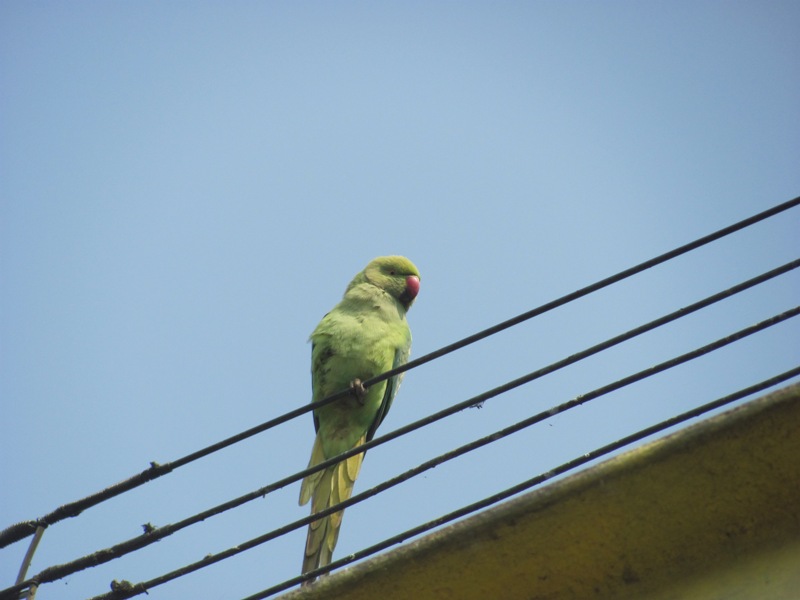
 As we walked upon the 668 m long dam, hundreds of green parrots greeted us. They glided above us in small groups. Some sat on the Iron girders of the bays (21 in all, each 9.14 m in width) or dangle perpendicularly clawing upon the small fissures on the 47 m high wall of the dam. To our right lay the reservoir with its immaculate sprawl of crystal clear water dotted by bright yellow boats plying with tourists. Migratory birds wiz up in unison above the water as if they were following some unheard orchestra.

To our left was the rocky terrain where the river wriggles and hides itself from our view. The water was scarce as it was winter, the lock gates were barely open, just enough to feed the river out of extinction. As we try to trace its meandering path we saw to our left a picnic spot where groups reveled in the soft December sun. We crossed to the other side and went down the rocky steps for boating. The experience of paddling in the cool water and being encircled by birds is sheer bliss. 

We headed for the irrigation bungalow for lunch. In The evening we sat in the terrace with the setting sun with the sun gathering its russet coloured cloak just as the moon got bolder and glittered upon the tiny waves.

Where to stay: Mayurakshi Bhavan of the Irrigation Department, Govt. of West Bengal. A double-bed room costs Rs 300 per night. For bookings contact: Deputy Secretary, Irrigation Department, Water Resource, Development Building, Salt Lake City, Kolkata, Phone +91 33 23212259.

Jharkhand Government’s Irrigation Bungalow: for booking write to Superintendent Engineer, Irrigation Department, dumka-814101

A Youth Hostel exists nearby which can be booked from “Yuva Kalyan Office, 32/1, BBD Bag ( South), Kolkata -700001, Ph- +91 33 22480626

Navigator :  By Train to Rampurhat, Suri or Bolpur. From there hire a car to Messanjore. Regular bus service is also available from Suri to Dumka, en-route to massanjore.


Courtesy: The text was published in Discover India.
Enhanced by Zemanta

Thursday, March 1, 2012

Shantiniketan – The abode of peace


Sometimes taking a small step out can take you far off, lift you from the monotony as you start introspecting in the luxuriant freshness. Shantiniketan is one such place, which is only two and a half hours from Kolkata, yet the ambience there is so dissimilar and clean that it takes you in its realm of charm, instantly.

We deliberately did avoid the riffraff of the Pous mela as we were in no mood to toss ourselves in the hoi polloi, where enjoying Rabindranath comes a distant second to the froth and frolic of the pot bellied nouveau-riche.

A glimpse of the shrinking landscape
We stayed at Prantik, next to Bolpur, the station to disembark for visiting the Ashram. Mou, a friend of ours was kind enough to lend us the keys of her house at Prantik which was no less comfortable than a beautiful guest house. On the first day we hired a rickshaw and headed for the Ashram towards Bhubandanga. As the dark lanky fellow pedaled with all his might and his calf expanded with every thrust to fight an unequal battle against poverty, he started his rendition- “ This area is Bhubandanga, a village in the nineteenth century Bengal, named after the deadly dacoit, Bhuban, who prowled this area. The landscape was amazing. 
Over undulating laterite soil, lush green fields of paddy, orchards of mango and grooves of sal, shimul and jamun created an ambience where any tired traveler could take a break. Maharshi Devendranth Tagore, Father of Gurudev Rbindranath Tagore instantly liked the spot seeing it from the boat en route to Raipur. He sat under a Chatim tree and meditated and found peace. He decided to buy around 20 Bighas of land around the tree from the erstwhile zamindar of Raipur, built a glass prayer hall in the vicinity and planted trees to establish an Ashram which he named Shantiniketan, i.e., the abode of peace, he stopped as he was out of breath. Then he started again…

“Gurudev first visited Shantiniketan at the age of 12. In 1901, on the 7th Day of Pous, he established the ‘Brahmacharya Ashram’ which ran like a Gurukul system out in the open. In 1931, he formally started the Visva Bharati University, infusing funds that he got from the Nobel Prize and the royalties from his books, into his ashram” he stopped his pedaling. That is the ashram gate and there you will find a guide. My name is Babu Mukherjee, a Brahmin and a rickshaw puller. “Achha Namaskar!”. He left. 
Amra-Kunja
Bewildered, we stood pondering over his abilities when someone called us. “Sir, I am Samir, a registered guide who can show you the ashram”, he flashed his i-card. We hired him. Soon he took us to the Chatim tala. The old dead trees were replaced by new saplings, as old order Changes yielding place to the new. We entered the famous Amra-Kunja where Samabartan Utsav- the annual convocation ceremony is held every year. Each pass out is given three leaves of chatim to commemorate Devendranath’s first step in Shantiniketan.
Upasana Griha

 A Glass house for prayers (upasana griha) is located close by. The temple is devoid of any idols and men of any religious faith can offer prayers to Him over here. We saw Hindi Bhavan (famous for its rich library), China Bhavan (Centre of Chinese studies) Vidya Bhavan (College of Humanities), Sangit Bhavan (College of Music and dance) Siksha bhavan (College of science). Nearby was the Gurudev’s new house Dehali, where he used to live with his wife Mrinalini Devi. A red pebbled road covered by sal trees on both sides stretches itself from the Daheli to the Chaiti (or kitchen).  This road was very close to gurudev’s heart and whenever he was disturbed he used to stroll straight on this road, which he named Saalbithi. Within a flicker I saw a tall, white bearded man briskly walking on the red track, slightly stooping forward. His white hair and beard playing in the cold west wind. Then he faded in thin air. “Hallucination at its natural best” I laughed at myself.
Saal Bithi

 Far off junior classes are being held below the trees till today, following the Gurukul system of education that Tagore espoused and re-introduced in India.

 At the north of the campus is the famous Uttarayan Complex, where Rabindranath built his famous houses and lived. All of them were planned by Rathindranath, his son. UDAYAN, KONARKA, SHYAMALI, PUNASCHA and UDICHI are the five houses here. 
"The Matsa-Mahish" by Ramkinkar Baiz

The museum and the library is situated in Bichitra, now called Rabindra Bhavan. Manuscripts, paintings of the Tagore family,  first copies of books, prizes and belongings of Gurudev are preserved here. 
Kala-bhavan

Kalabhavan or the College of Arts has a museum which showcases paintings, murals, frescoes and sculptures of famous artists like Ramkinkar Baiz, Nandalal Bose, Binod Bihari Mukherjee ( Teacher of Satyajit Ray) and Somnath Hore.

One should avoid Wednesdays as it is the official day-off over here. One can visit the Kankalitala temple 4 km away adjacent to the Kopai River. The journey along the river will be etched permanently, so arresting is the landscape.

Three Kilometer away is Sriniketan, a place of manufacture and sales of traditional handicrafts, Kantha embroidery, Dokra Crafts and Batik paintings. In the adjacent podium I saw a group of Bauls singing Lalon Fakir’s songs, their content extolling humanity – devoid of caste, creed or religion. What else can be more befitting?

Navigator :-

 By Train form Howrah or Kolkata which is approximately 136 Km.
 By car The route is a bit longer about 214 km. Nearest Airport is Kolkata. Train is however the best option and Shantinikatan Express, Bolpur Express and intercity express are the best options.

Where to Stay:
       West Bengal Tourism Development Corporation’s Shantiniketan Tourist Lodge at Bolpur        (03463-52699), Camellia (+91 3463 262 043 ), Mark Meadows (+91 3463 264 870 ), Chhuti (+91 3463 252 692 ) are some of the hotels of stay. 
Enhanced by Zemanta